A clear mountain stream can look safer than it is, and a water filter can inspire more confidence than it deserves. The practical question is not simply, “How do I clean this water?” It is: what problem am I trying to solve, and does my method solve it?
In the field, during a utility interruption, or while moving with limited gear, water treatment is a sequence of decisions. Start by avoiding a bad source, improve visibly dirty water before treatment, then use a method that addresses the contamination you reasonably expect.
1. Start with the source, not the gadget
Use bottled or known safe water when it is available. When it is not, choose the best source you can find: water that is not visibly polluted, foul-smelling, oily, unusually colored, or near an obvious chemical spill, sewage discharge, mine tailings, or flood debris.
This distinction matters because boiling, chemical disinfection, and ordinary portable filters are aimed chiefly at disease-causing organisms. They do not reliably remove fuel, industrial chemicals, heavy metals, salt, or radioactive material. If chemical contamination is known or reasonably suspected, find another source and follow local emergency guidance rather than trying to improve the water through repeated treatment.
2. Make cloudy water clearer before you treat it
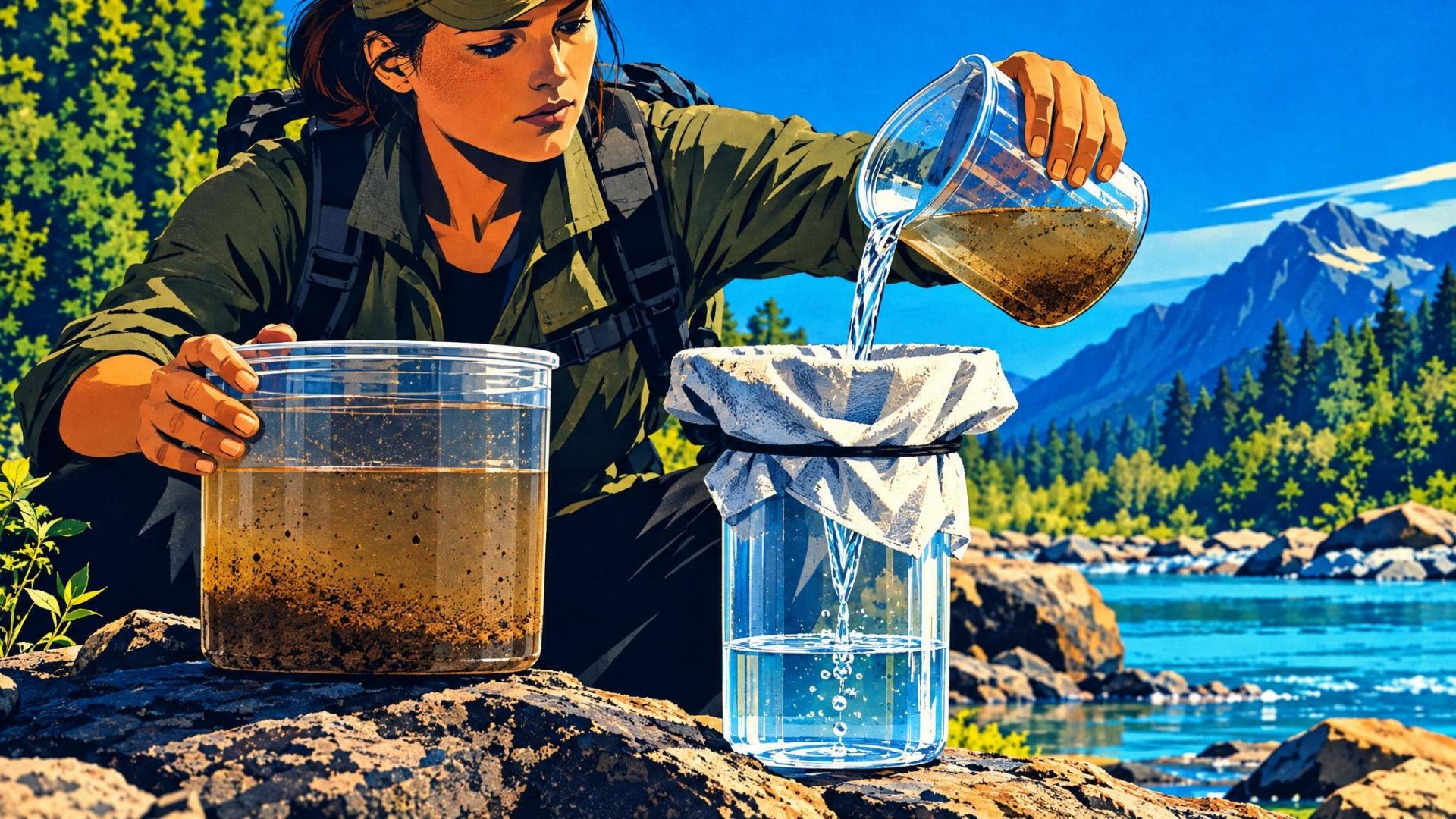
Cloudiness is more than an aesthetic problem. Dirt and organic material can shelter microorganisms and reduce the effectiveness of chemical disinfection. Let silty water settle when time permits, then pour the clearer water through a clean cloth, paper towel, or coffee filter into a clean container.
That improvised straining step is not disinfection. It removes suspended material; it does not make the water safe to drink on its own. Think of it as preparing the water for the real treatment step.
3. Know what each treatment method can and cannot do
Boiling
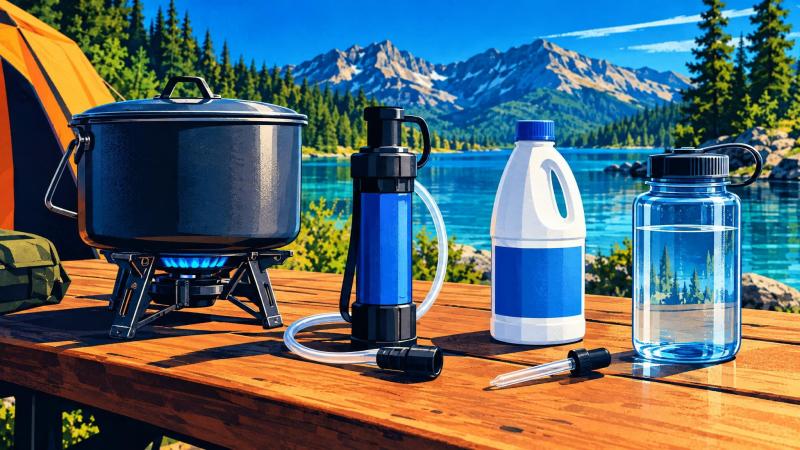
When fuel, time, and a safe heating vessel are available, boiling is the most dependable general option for biological contamination. Bring clear water to a rolling boil for at least one minute; at high elevation, use the longer boiling time recommended by public-health guidance. Let it cool in a clean, covered container.
Boiling does not remove chemical contaminants, and it does not excuse poor source selection. But for bacteria, viruses, and parasites, it is a powerful method because it does not depend on a filter cartridge’s condition or a tablet’s expiration date.
Chemical disinfection
Chlorine- or iodine-based products can be useful when you cannot boil water, provided you follow the product label exactly and give the treatment its full contact time. With household bleach, use only a fresh, regular, unscented product whose label identifies sodium hypochlorite and indicates it is suitable for disinfection. Scented, color-safe, splashless, or cleaner-added products are not substitutes.
Chemical treatment is less dependable in very cold, cloudy, or colored water, which is another reason to settle and pre-filter first. Never guess at doses, and never mix bleach with other cleaners.
Portable filters
Filters are valuable, especially for improving water that contains sediment and larger organisms such as protozoan parasites. Yet many portable filters do not remove bacteria or viruses. Read the manufacturer’s stated performance rather than assuming that “filter” means “safe water.” Depending on the source and the filter, follow filtration with boiling or an appropriate disinfectant.
4. Prevent recontamination
Water can be properly treated and then spoiled by a dirty bottle, an unwashed cap, or hands that have handled untreated water. Keep treated water in a clean container with a secure cover. Do not dip a used cup into the storage container; pour what you need. Mark containers clearly so untreated and treated water never become confused.
A compact decision sequence to remember
- Reject: avoid sources with suspected chemical contamination or obvious pollution.
- Settle and strain: remove sediment before relying on chemical treatment.
- Treat: boil when practical; otherwise use a correctly selected and correctly used disinfectant. Use filtration according to its stated capabilities, not wishful thinking.
- Store: protect treated water from dirty hands, containers, and utensils.
Water procurement is only one part of survival, but it is the part where a small misunderstanding can become a serious problem. The Official U.S. Army Survival Guide: Updated Edition is a useful companion for readers who want the wider field context: water procurement, shelter, firecraft, first aid, navigation, signaling, and survival planning across different environments.