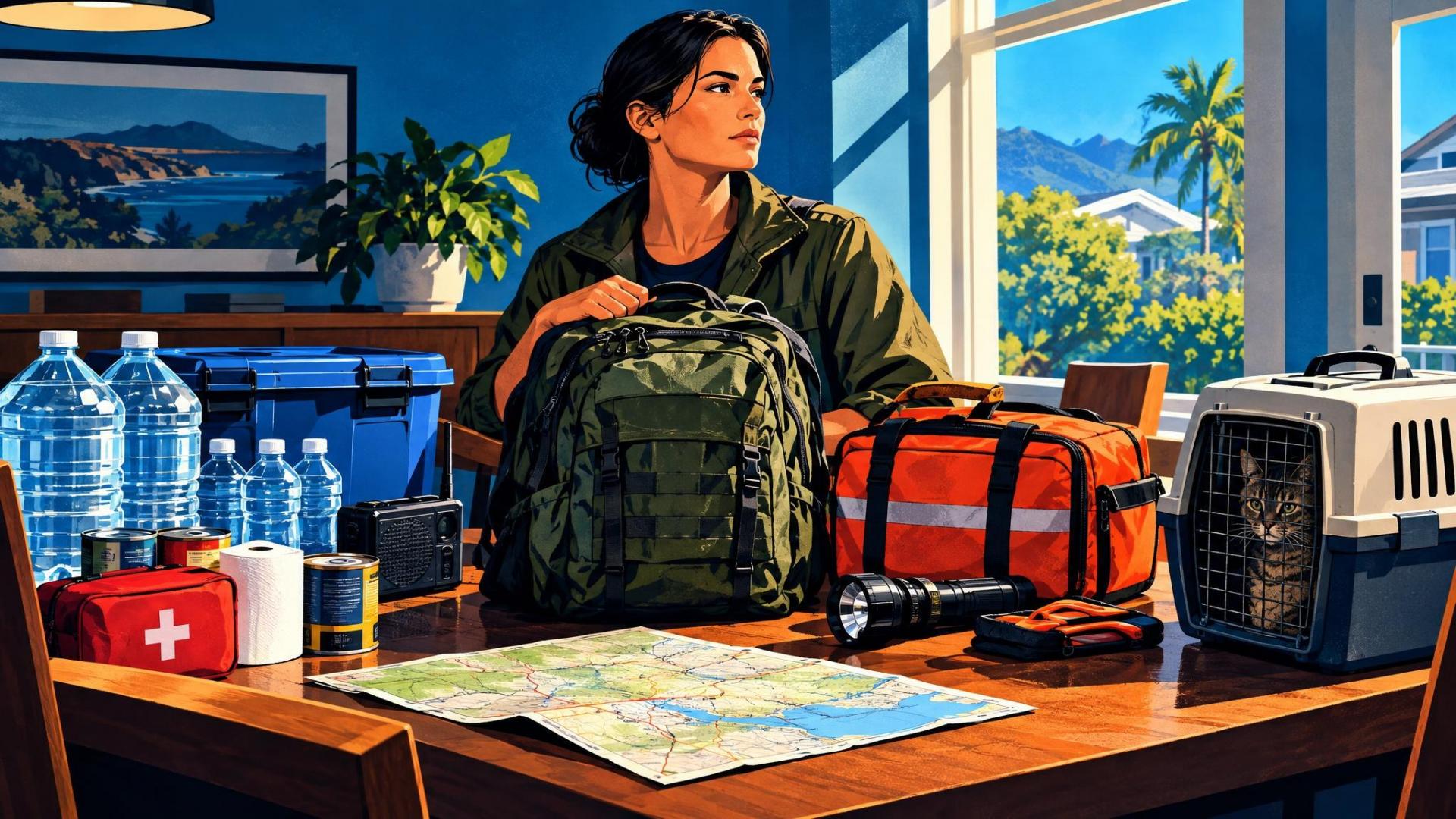
An emergency kit hidden at the back of a closet is better than no kit at all—but it may be the wrong kit when you have to leave quickly, are stranded in a vehicle, or cannot return home. The practical answer is not one enormous container. It is a small system: supplies kept at home, a portable go-bag, and a modest vehicle kit.
This approach makes preparedness easier to use. It also prevents a common mistake: packing every useful item into one tote that is too heavy, too distant, or too inconvenient to move when time matters.
Start with the three places an emergency can find you
Think about the job each kit must do before filling it.
- Home kit: supports everyone staying at home during an outage, severe weather event, or interruption to local services.
- Go-bag: lets each person leave promptly if officials advise evacuation or the home is no longer safe.
- Vehicle kit: provides basic warmth, visibility, hydration, communication, and roadside support if a trip is interrupted.
The supplies will overlap, but the containers should not. A case of water is sensible at home; it is not a realistic item to carry in a go-bag. A change of clothes and sturdy shoes make sense in a go-bag; they do little good if they are stored only in a basement bin.
1. Build the home kit around time, not shopping lists
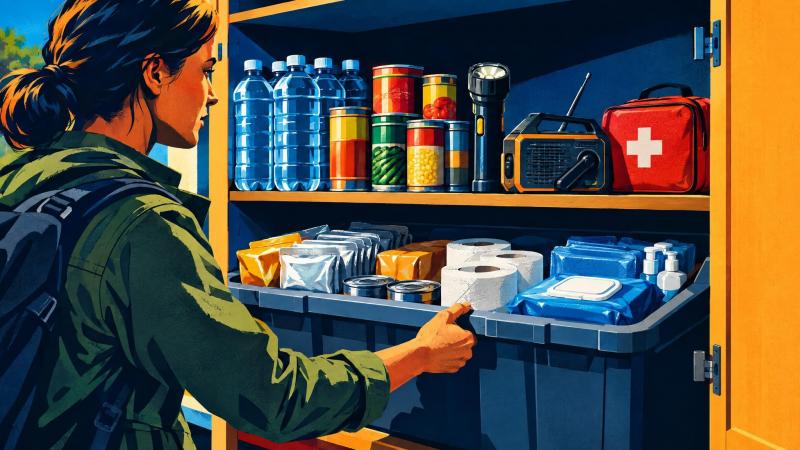
At home, begin with water, food, light, communications, sanitation, and essential health needs. Ready.gov advises keeping one gallon of water per person per day, with the amount adjusted for the likely length and nature of an emergency. Store it where it is protected from heat and where you can reach it even if part of the house is unusable.
For food, choose familiar nonperishable items that your household will actually eat and can prepare with the tools and fuel you safely have available. Include a manual can opener if canned food is part of the plan. Keep a flashlight, spare batteries, a battery-powered or hand-crank radio, a first-aid kit, sanitation supplies, local maps, and copies of important information in a waterproof pouch.
Then personalize it. Infants, pets, people who use mobility equipment, and anyone who relies on prescription medicines or medical supplies need specific planning. Do not assume a generic kit covers those needs. Discuss medication continuity and device backup requirements with the relevant clinician, pharmacist, supplier, or utility provider well before an emergency.
2. Pack a go-bag that one person can carry
A go-bag is not a miniature house. Its purpose is to get you safely through the first stretch of an evacuation. Use a backpack or other bag that the intended person can lift, carry, and load into a vehicle without help.
Include drinking water, compact food, needed medicines, a flashlight, charging cable and backup battery, a small first-aid kit, hygiene items, weather-appropriate layers, sturdy footwear, copies of identification and key contacts, some cash, and items required for children or pets. Add a paper list of phone numbers: a phone with a dead battery or an overloaded network is not a dependable address book.
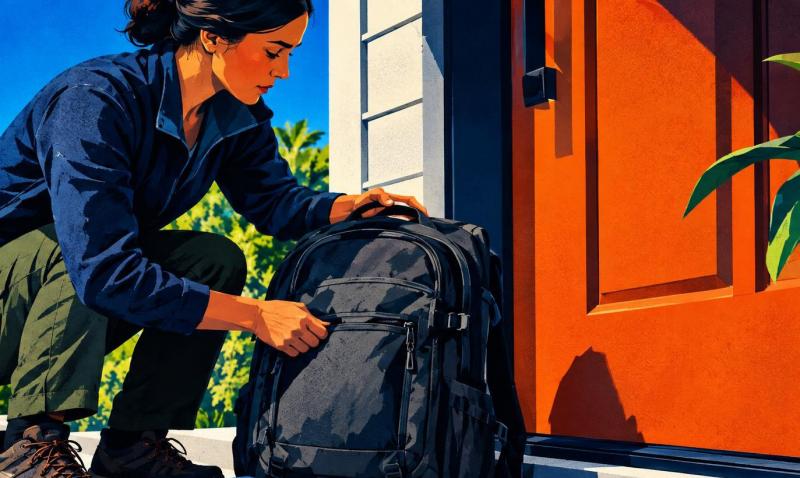
Place the bag near an exit, not in an attic, a locked shed, or behind holiday decorations. If evacuation is possible in your area, decide in advance who grabs the bag, who handles pets, and where the household will meet if separated.
3. Keep the vehicle kit focused and seasonally appropriate
A vehicle kit should help you wait safely, signal for assistance, and handle ordinary disruptions. Useful basics include water, shelf-stable snacks, a flashlight, a phone charger or power bank, a reflective vest or other high-visibility item, a warm layer or blanket, basic first-aid supplies, local maps, and any equipment appropriate to your climate.
Check the kit before long trips and whenever the seasons change. Summer heat can damage some supplies; winter travel may call for extra insulation, traction aids, and a fuller tank of fuel. Avoid treating the vehicle kit as permission to drive into dangerous conditions. If authorities close roads or warn against travel, the sound plan is usually to stay off them.
4. Put the plan beside the equipment
Supplies help, but a household also needs simple decisions made ahead of time: two meeting places, an out-of-area contact, evacuation routes, pet arrangements, and knowledge of local alerts. Keep these details on paper as well as on phones.
Set a recurring reminder to inspect all three kits. Replace expired food, refresh water as directed by its manufacturer, test lights and power banks, update documents, rotate clothing for the season, and revise contact information. A ten-minute review is far easier than discovering a missing item when conditions are already stressful.
A useful reference when you are ready to go deeper
A kit works best as part of a broader household plan for hazards, communication, evacuation, and recovery. FEMA: Are You Ready? An In-Depth Guide to Citizen Preparedness is a substantial print reference for readers who want to work through those connected decisions in more detail, including disaster supplies and family communications planning.