A student can perform a steep turn, short-field landing, or diversion to tolerances and still be unsure what to do when the plan begins to unravel. The fix is not to make every lesson theatrically complicated. It is to give the maneuver an operational reason and one or two decisions that the learner must own.
Scenario-based training does not replace careful practice of the maneuver itself. It gives that practice a realistic frame: a reason for the flight, changing information, available options, and a chance to explain a choice. For instructors, it is a practical way to teach judgment without waiting for an actual problem to arise.
Start with the training objective, not the story
Choose one primary skill. If the lesson objective is short-field landings, the scenario should create a believable need to assess runway length, wind, obstacles, aircraft performance, and the possibility of going elsewhere. Do not bury the lesson under five unrelated emergencies.
Write the objective in plain language: By the end of this lesson, the learner will select and execute an appropriate landing plan for a short runway while explaining the relevant performance and risk considerations. The maneuver remains visible; the decision-making now has a place beside it.
Give the flight a reason to exist
A useful scenario begins with a credible purpose, not an instructor ambush. Perhaps the learner is taking a friend to a nearby airport for lunch, returning before an appointment, or making a daytime cross-country to an airport with a shorter runway than the home field. The details need only be sufficient to affect the choices.
Then add a constraint that matters. A modest crosswind forecast, a revised runway assignment, rising density altitude, a delayed departure, or a fuel stop that is no longer as convenient can all prompt thoughtful discussion. The point is not to trap the learner into one “correct” answer. It is to let the learner compare reasonable options using the facts available.

Plan decision points before the engine starts
Do not rely on inspiration at 2,000 feet. Identify one or two moments when you will pause the scenario and ask the learner to assess the situation. Good questions are specific and open enough to reveal reasoning:
- What has changed since the preflight briefing?
- What information do you still need before committing to this approach?
- What are your realistic alternatives from here?
- What would make you discontinue this plan?
Ask for the learner’s assessment before supplying yours. If an answer is incomplete, follow with a narrower question rather than immediately delivering a lecture. That distinction matters: the learner should practice gathering, weighing, and applying information, not merely recognizing the instructor’s preferred response.
Keep safety margins explicit
A scenario is never permission to manufacture risk. Establish the instructor’s intervention points in advance, complete the required preflight planning, and use conservative margins appropriate to the learner, aircraft, weather, airport, and exercise. If the changing conditions make the planned maneuver unsuitable, that is not a failed scenario. Choosing to discontinue, divert, delay, or return can be the most valuable outcome of the lesson.
Likewise, do not confuse a fictional pressure with real pressure. A lunch reservation or imagined schedule conflict may help establish motivation, but it must never make a learner feel compelled to continue an unsafe operation.
Debrief the decision, not only the landing
After the flight, begin with the learner’s account. Ask what information mattered most, where the plan changed, what alternatives were considered, and what would be done differently next time. Only then add your observations on maneuver performance.
A concise debrief might separate three questions: What happened? Why did you choose that response? What cue will you notice earlier next time? This turns a pass/fail discussion into a repeatable habit of reflection.

Build a small library of reusable scenarios
Save the scenarios that work. A local-weather diversion, an unfamiliar airport arrival, a developing crosswind, or a time-and-fuel tradeoff can be adjusted as the learner progresses. Change the aircraft, runway, route, weather picture, or learner experience level; keep the instructional objective clear.
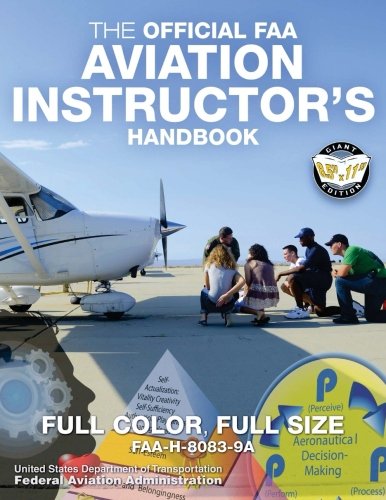
For a deeper treatment of lesson planning, assessment, communication, risk management, and techniques of flight instruction, The Official FAA Aviation Instructor’s Handbook: Full Color, Full Size is a useful working reference for instructor candidates and experienced aviation educators alike.