The most expensive mistake after realizing you may be lost is often made in the next five minutes: walking faster, farther, and with less certainty. A better response is to stop, make a deliberate assessment, and shift from “finishing the route” to “staying safe and being found.”
This is not a rule against all self-rescue. If you can identify your position and safely retrace a short, known stretch of trail, that may be sensible. But if you are injured, night is approaching, conditions are worsening, or you are no longer sure where you are, aimless travel can turn a manageable delay into a search-and-rescue emergency. The National Park Service advises people who cannot safely retrace their route to seek help, stay put unless there is an immediate threat to life, conserve energy, find shelter, and signal.
1. Stop long enough to think clearly
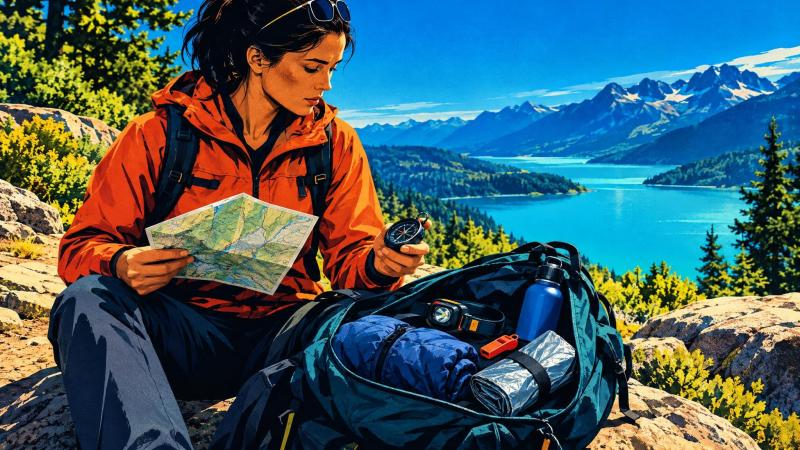
Pause. Breathe. Take stock before spending daylight and energy. Check for injuries, the weather, remaining daylight, water, warm layers, shelter, light, whistle, map, compass, and phone battery. Notice obvious hazards: a rising creek, lightning exposure, falling branches, cliff edges, extreme heat, or cold wind.
Then separate a known problem from an unknown position. A missed junction that you can confidently locate on your map is one thing. “I have been heading downhill for an hour and nothing looks familiar” is another. Do not let embarrassment turn uncertainty into a forced march.
2. Try a limited self-rescue only when it is genuinely safe
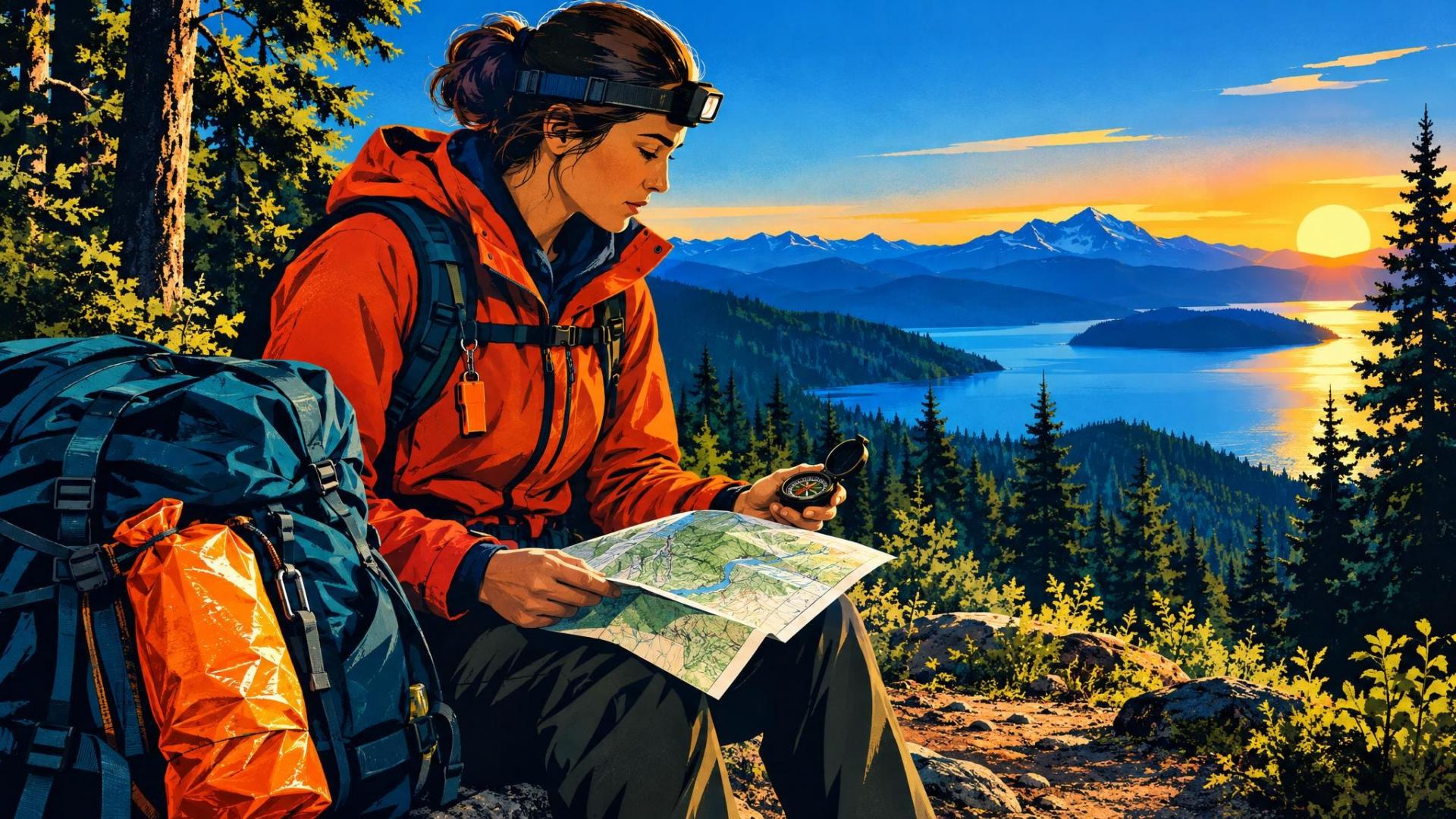
Use your map, compass, GPS device, downloaded map, and landmarks to establish where you are. If that identifies a safe, familiar retrace route, go back carefully while paying close attention to every decision point. Do not improvise a cross-country shortcut just because it looks direct.
If you cannot confidently establish your location, stop changing it. A phone can be useful for sharing coordinates and calling 911, but it is not a replacement for basic preparation: park guidance specifically cautions that service and battery life may be limited.
3. Call for help early, and make the call useful
If you have service and need assistance, call 911. Give the dispatcher your coordinates if available; the trailhead or area where you began; your last known location; a description of landmarks and terrain; clothing colors; equipment; party size; injuries or medical conditions; and your current plan to stay put or move to immediate safety. Those details give responders a practical place to begin.
Preserve phone power afterward. Lower screen brightness, use airplane mode if you are awaiting a return call and do not need an active connection, and avoid using the phone as entertainment or a flashlight if you have a headlamp. If you have already left a trip plan with a trusted contact, that person can also provide rescuers with your intended route and return time.
4. Put shelter and temperature control ahead of comfort
Exposure can become the urgent problem long before hunger does. Get out of wind, rain, snow, or direct sun as conditions require. Put on dry or insulating layers before you feel seriously cold. Use a tarp, bivy, tent, or emergency blanket to block wind and retain warmth; the National Park Service lists emergency shelter and extra clothing among the core systems to carry for unexpected delays.
In cold weather, wet clothing and wind accelerate heat loss. The National Weather Service recommends layers, covering exposed skin, sheltering from wind, and changing into dry clothing as soon as possible after getting wet.
Do not build a fire automatically. A fire may provide warmth and signal value, but local restrictions, dry fuels, wind, and wildfire risk matter. Use a stove, layers, and shelter where those are the safer choices; if you do make an emergency fire, keep it controlled and fully extinguish it when leaving is appropriate.
5. Make yourself easier to find
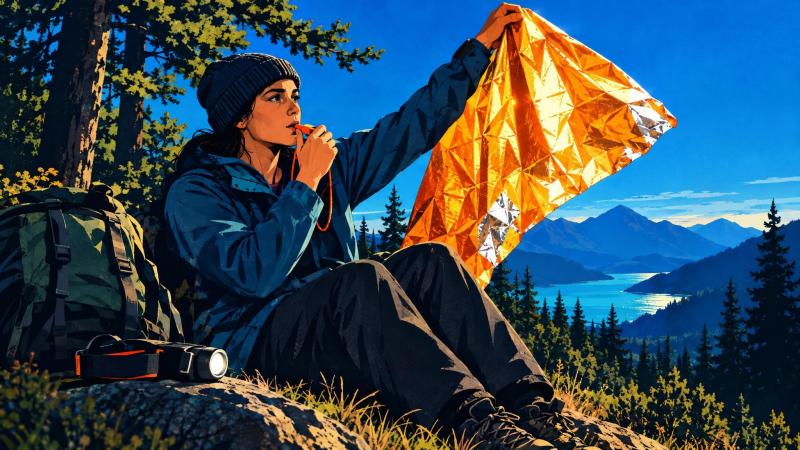
Visibility is a survival skill. Put bright clothing, a tarp, or an emergency blanket where it can be seen without placing yourself in a hazard. Use a whistle rather than shouting: it carries farther with less effort. A flashlight can be used to signal after dark; preserve enough battery to remain visible through the night. The National Park Service also suggests signal mirrors and large, visible ground markings where aircraft may be searching.
6. Conserve resources and leave a clear record
Drink and eat sensibly, rest, and avoid unnecessary wandering. If you must move because of an immediate danger, leave a visible note or marker stating the time, direction of travel, destination if known, party condition, and reason for moving. Keep making deliberate decisions rather than reacting to discomfort or anxiety.
The goal is not to prove toughness. It is to remain warm or cool enough, hydrated, visible, and locatable long enough for a safe resolution.
Build the habit before the next trip
A short outing deserves real preparation. Tell a trusted person where you are going and when you expect to return; carry navigation tools you know how to use; pack light, shelter, water-treatment capability, first aid, extra food, fire-starting equipment where permitted, and clothing suited to the worst plausible weather. The NPS groups these needs as the Ten Essentials and emphasizes tailoring them to the location and activity. ([nps.gov](https://www.nps.gov/articles/10essentials.htm?utm_source=openai))
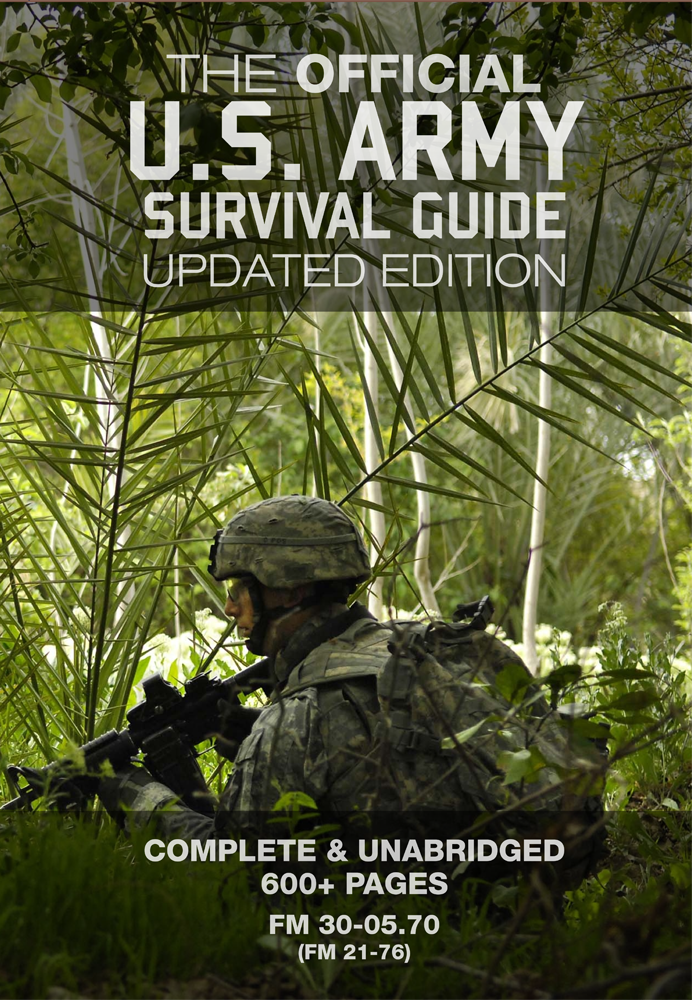
For a broader reference that explains survival planning, psychology, shelter, water, signaling, medicine, navigation, and environment-specific problems in one place, The Official US Army Survival Guide—Updated Edition is a useful study-and-reference volume. Carlile’s complete edition is based on FM 3-05.70, the extensively revised successor to FM 21-76, and is organized around the systematic priorities that matter when normal support is unavailable.