A belt is visible. A well-developed combat mindset is not. That is why it is easy to misunderstand the Marine Corps Martial Arts Program as a catalogue of strikes, throws, chokes, and counters. Those physical skills matter, but MCMAP was designed as a wider system: physical discipline, mental discipline, and character discipline trained together.
That distinction changes how a Marine should read a MCMAP reference, prepare for instruction, and assess progress. A technique can be memorized from a page. Judgment, restraint, confidence under pressure, and responsible use of force require discussion, repetition, supervision, and leadership.
Three disciplines, one program
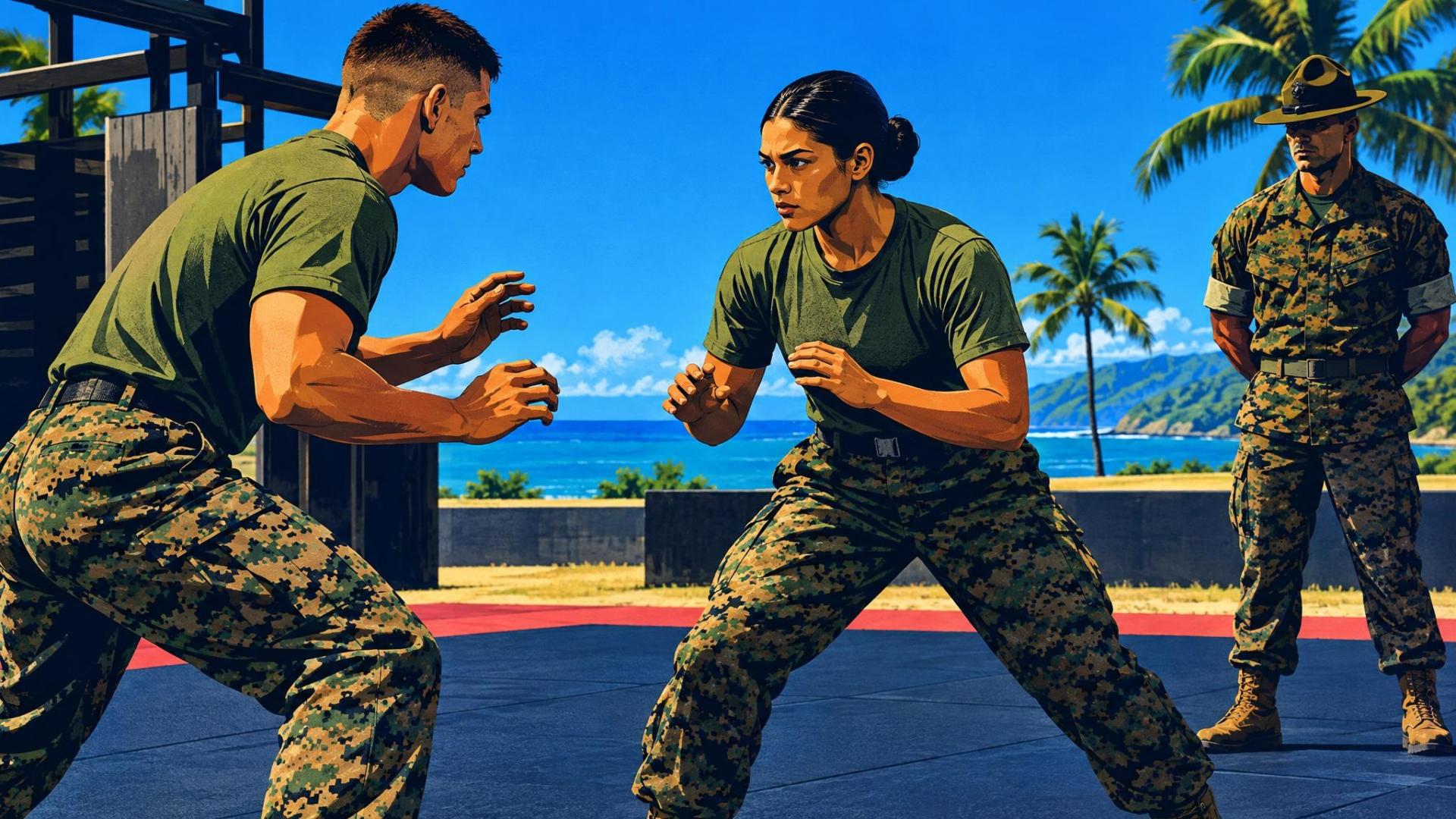
The physical discipline is the part most people recognize. It includes close-combat movement and fighting skills, integrated with the equipment and conditions Marines may encounter. But the program’s physical content is not meant to be a collection of isolated moves. It is built around fundamentals such as balance, posture, distance, timing, controlled power, and the ability to move purposefully under stress.
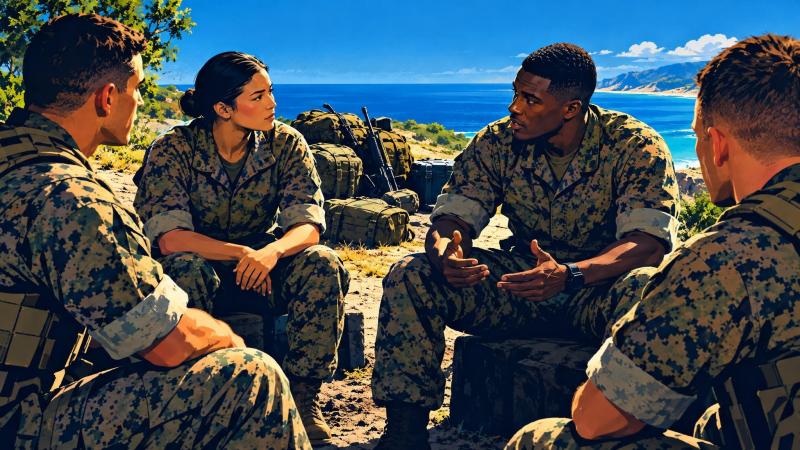
The mental discipline develops the combat mindset through professional study, warrior case studies, martial-culture study, and an understanding of combative behavior. In plain terms, it asks a Marine to think before the event: What is happening? What is the mission? What are the limits? What action is necessary?
The character discipline supplies the moral compass. MCMAP connects its training to Honor, Courage, and Commitment, as well as leadership, integrity, and responsible decision-making. Without that discipline, physical proficiency can become mere performance. With it, a Marine is expected to understand not only how force may be applied, but when it must be controlled or withheld.
Why the fundamentals deserve more attention
Advanced-looking material attracts attention because it seems to promise a shortcut. In a real training system, fundamentals do the opposite: they slow the learner down long enough to build habits that still work when fatigue, equipment, uneven ground, limited space, or stress interfere.
A useful way to study any MCMAP lesson is to ask four questions before worrying about its final movement:
- Position: Where should your posture, balance, and hands be before the action begins?
- Purpose: What problem is the technique intended to solve?
- Control: What keeps the training partner safe during practice?
- Decision: What legal, ethical, and tactical conditions govern whether force is appropriate?
How to use a MCMAP manual responsibly
- Start with the program’s purpose. Read the introductory material before turning to a specific technique. Establish that MCMAP combines mental, character, and physical development rather than treating fighting skill as an end in itself.
- Study the lesson context. Note the belt level, prerequisites, safety notes, equipment context, and instructor guidance associated with the material. Do not pull a technique out of its training sequence.
- Learn the vocabulary away from the mat. Use the manual to understand terms, positions, objectives, and common safety language before formal training. This makes instructor-led practice clearer and more efficient.
- Reserve physical application for approved training. Train only in the appropriate setting, with qualified supervision, suitable protective measures, and a partner who understands the drill.
- Debrief all three disciplines. After training, review more than whether the movement worked. Consider your awareness, communication, control, judgment, and the character tie-in for the session.
A training manual works best when it supports action
A good full-size reference is especially helpful before and after instruction. Before training, it can clarify terminology and help a Marine arrive ready to learn. After training, it can support review of the lesson’s purpose, safety requirements, and wider connection to the MCMAP framework. It is also valuable for prospective Marines and military-history readers who want to understand why the Corps treats martial arts as a program of development rather than a sport curriculum.
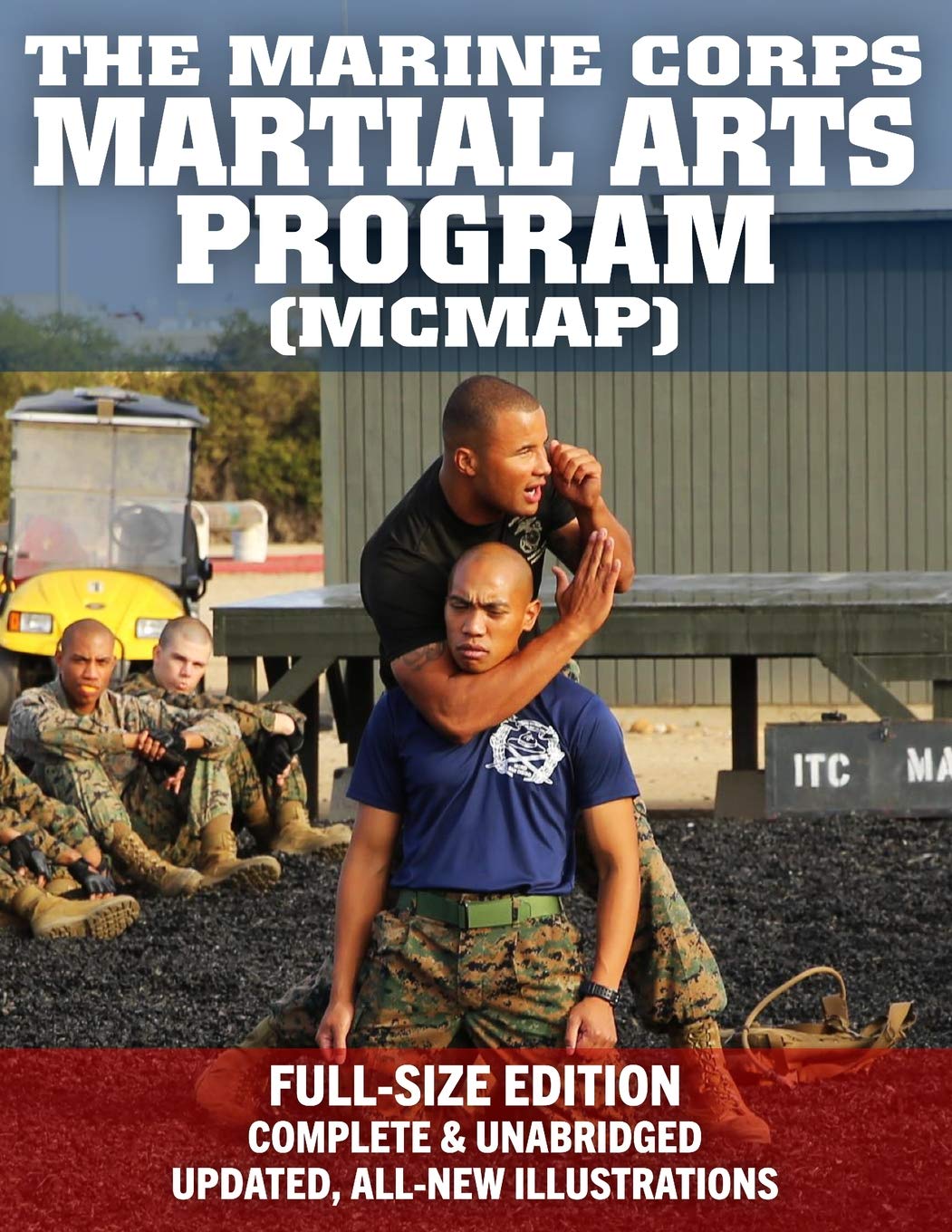
The Marine Corps Martial Arts Program (MCMAP) – Full-Size Edition gathers the program’s material in a large-format reference intended for careful study. Read it with the same priority MCMAP gives its own structure: fundamentals first, supervision for practice, and character alongside capability.
The point is to develop controlled capability
The strongest takeaway from MCMAP is that Marines — and other trainees — should develop the physical competence, mental readiness, and ethical discipline to meet a close-combat problem responsibly when duty and ciricumstances demand it.