When fatigue sets in, a notebook full of fragments can become nearly as hard to interpret as no notebook at all. The remedy is not more writing. It is a simple discipline: record what happened, where it happened, and when it happened before adding what you think it means.
That distinction matters in any field setting, but it is especially important in military observation and reporting. The observer may have only a brief glimpse, poor light, changing weather, or an interrupted view. A useful log preserves the facts well enough that a team leader, relief, or analyst can understand them later without borrowing your memory.
Start with a page that answers the basic questions
Before an observation period begins, put the enduring information at the top of the page: date, your location or observation point, the area you are watching, and the time standard being used. In a military setting, follow the unit’s SOP and reporting requirements; consistency across a team is more valuable than an individually clever format.
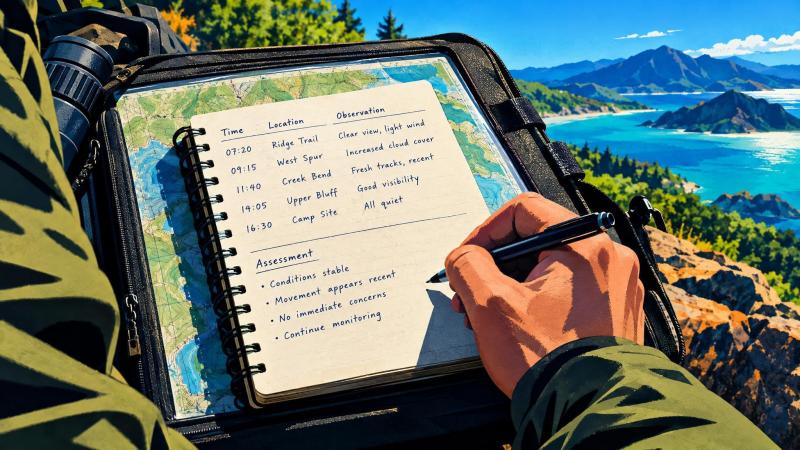
Then make every entry begin with a time. A short line such as 1417 — two vehicles entered road junction from west is much more useful than a paragraph written from recollection at 1600. If you later revise an entry, add the new information as a new line rather than silently rewriting the original. The sequence itself can be important.
Separate observation from interpretation
The most reliable field note has two layers:
- Observation: what you directly saw, heard, or otherwise verified.
- Assessment: what you believe the observation may indicate.
For example, three personnel carried long cases from a truck into a building is an observation. The cases may contain communications equipment is an assessment. Both can be worth recording, but they should never be blended into one statement. A reader must be able to tell where the evidence ends and the inference begins.
This habit also protects against a common error: filling gaps with an expected story. If distance, concealment, darkness, or time pressure makes an identification uncertain, say so plainly. “Possible,” “appeared to,” and “unable to confirm” are not weak language when they accurately describe the limit of the observation.
Use landmarks, not vague directions
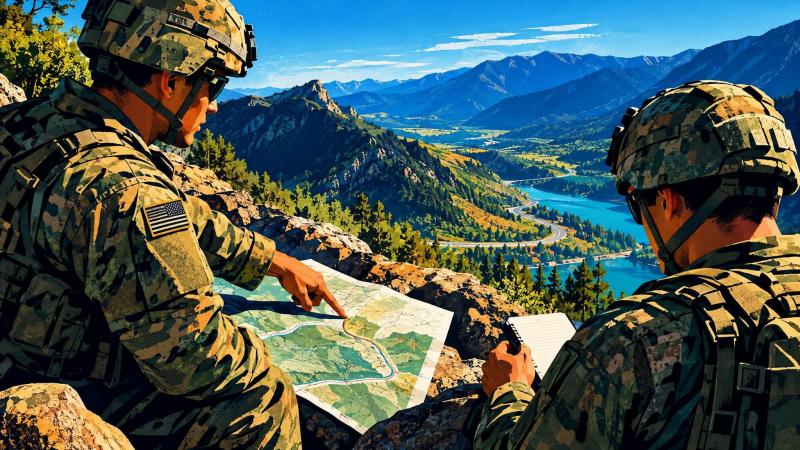
“Left side” and “near the trees” may make sense while you are looking at the scene. They become useless once the view changes. Tie activity to durable features: a road bend, a bridge, a building corner, a ridge line, a named grid reference, or a numbered point on an authorized sketch or map.
Keep the description proportional to what matters. A note about a vehicle is generally more useful when it records its type, color, distinguishing features, direction of travel, occupants if clearly visible, and the landmark where it was last seen. It is less useful when it includes a page of uncertain detail but omits the time.
Make uncertainty visible
A field record should show confidence, not pretend to possess it. Build a small vocabulary you and your team use consistently:
- Confirmed: directly observed with sufficient clarity.
- Probable: supported by several indicators, but not fully verified.
- Possible: plausible, with limited evidence.
- Unknown: noticed but not identified.
Do not use these labels as decoration. Pair them with the reason for the limit: low light, partial view, movement behind cover, distance, or an obstructed line of sight. That helps the next person decide whether the report needs follow-up or can be treated as dependable.
Close the log with a handoff
At the end of the period, take two minutes to review the page. Mark anything that was reported separately, correct obvious transcription errors without erasing the original sequence, and note unresolved questions. If another observer will take over, state the last confirmed activity and the areas that need continued attention.
A useful handoff might read: Last confirmed movement at 1738: one white pickup departed east on paved road. Activity at warehouse stopped at 1745. Unable to determine whether personnel remained inside because the north entrance was obscured.
That is concise, factual, and actionable without claiming more than the observer knows.
Why a data-book mindset matters
Good observation is not merely noticing more. It is preserving details in a form another person can check, compare, and use. That is why records, reporting formats, observation, terrain reference, and disciplined review belong together in Army sniper training—not as an afterthought to marksmanship, but as part of the team’s wider fieldcraft.
For readers studying that broader discipline, The Official US Army Sniper Training and Operations Manual: Full Size Edition brings together observation, records, communications, field techniques, mission preparation, safety, and marksmanship reference material in one substantial volume. Use it alongside current unit guidance, approved training, and applicable law and policy.