The quickest way to sour a friendly Scrabble game is not a triple-word score. It is the moment someone plays a suspicious-looking word, someone else reaches for a phone, and neither player knows what happens next.
The fix is wonderfully unglamorous: agree on a challenge rule before the first tile is played. Two minutes of setup makes the rest of the game clearer, faster, and rather more companionable.
Why a dictionary alone is not enough
A dictionary answers one question: is this word acceptable in the word list we chose? A challenge rule answers a second, equally important question: what happens after somebody questions it?
Those are separate decisions. Different editions of the game, online platforms, clubs, and tournament settings may use different word lists and consequences for an unsuccessful challenge. A word that appears in an ordinary dictionary may also be absent from the list your group has agreed to use. Set the reference first; then set the consequence.
The three decisions to make before play
1. Choose one word authority
Pick a single agreed reference: the word list supplied with your edition, a specified Scrabble dictionary, or a particular word-checking tool. Do not combine sources midway through a game. If one player consults a general dictionary while another uses a game-specific list, the disagreement is built in.
For a casual household game, the simplest rule is often: “We use this one book or app, and its result settles the question.” If you play regularly, write the title or app name on the score sheet so next week’s game starts with the same understanding.
2. Choose the consequence of a challenge
There are three workable approaches. None is universally best; the right one depends on how competitive the table feels.
- No-penalty challenge: Check the play. If a word is not allowed, the player removes the tiles and loses that turn. If the play is valid, play continues with no extra cost to the challenger. This is forgiving and good for learners.
- Lose-a-turn challenge: An invalid play is removed and its player loses the turn; a valid play means the challenger loses the next turn. This creates more drama, but can discourage sensible checks.
- Points-penalty challenge: An invalid play is removed and its player loses the turn; an unsuccessful challenger gives up a small, agreed number of points. This keeps the challenger in the game while making speculative objections less tempting.
If children, new players, or guests are at the table, no-penalty challenges are usually the most generous choice. Save harsher consequences for a group that actively enjoys the bluffing and risk.
3. Decide when a play becomes final
Use a bright line. For example: “A play may be challenged until the next player draws replacement tiles,” or, in a slower game, “A play may be challenged until the next player begins arranging tiles on the board.”
The important part is not the exact line; it is having one. Once a player has started planning around new tiles, undoing an earlier turn becomes messy. A finality rule protects both players from accidental information and from endless revisiting.
A simple house rule that works for most groups
If your group needs a ready-made answer, try this:
We use one agreed word reference. A player may challenge before the next player draws tiles. If any newly formed word is not in the reference, the whole play comes off the board and that player loses the turn. If the play is good, there is no penalty for challenging.
This rule rewards curiosity without turning every unfamiliar word into a high-stakes courtroom scene. It also handles a common surprise: one move can create more than one word. If the challenge is to the play, check every newly formed word, not merely the long horizontal or vertical one that first caught attention.
Keep challenges from becoming personal
Say “challenge” or “let’s check that,” rather than “that is not a word.” The distinction is small but useful. You are questioning a play under the agreed rule, not questioning the other player’s honesty or vocabulary.
Likewise, do not treat unfamiliarity as proof. Scrabble rewards short words, odd plurals, variant spellings, and specialized vocabulary; the game is full of perfectly valid words that look as though they wandered in from another century. The reference settles the matter more reliably than anyone’s confidence.
Use the score sheet as a small record of the game
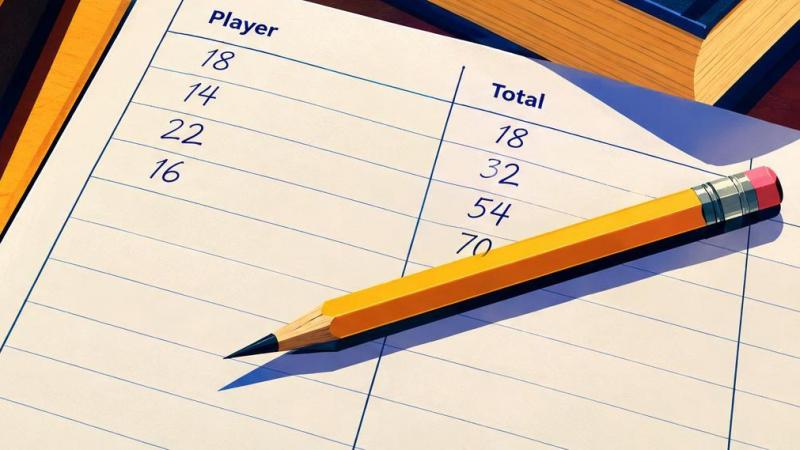
Record each player’s running total and, if your group enjoys it, note challenged plays in the margin. Over time, that turns a score sheet into a useful little archive: which words caused debate, which hooks kept appearing, and where a close game changed direction.
Players who want a practical place to keep scores while building familiarity with short words, high-value plays, word-study lists, and game terminology may find Make the Most of the Game – the Scrabble Player’s Companion! especially handy. Its mix of score sheets, strategy guidance, word lists, and training games suits the useful middle ground between a casual game and a serious hobby.
Agree on the rule, keep the reference within reach, and then get back to the real business: deciding whether that Q is a burden, a bluff, or the beginning of a splendidly annoying score.