A fund described as “low cost” may be inexpensive—or it may simply be inexpensive in one particular way. The expense ratio is essential, but it does not necessarily include every cost you will encounter when you buy, hold, or sell a mutual fund or exchange-traded fund (ETF).
Before treating any fund as a candidate for your portfolio, read its disclosures with one practical question in mind: What will this investment cost me at purchase, while I own it, and when I sell it? That small habit makes financial language much less mysterious and helps you compare like with like. It is also exactly the kind of vocabulary-building work that makes The Investing Dictionary a useful desk reference: terms such as expense ratio, load, net asset value, and bid-ask spread are easier to use when you understand what they mean in context.
1. Start with the expense ratio
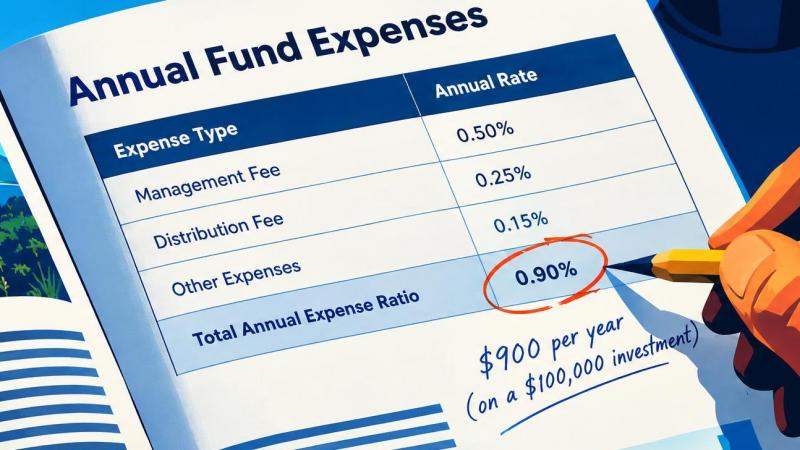
The expense ratio is the fund’s annual operating expenses expressed as a percentage of its assets. It commonly includes management fees, administrative costs, and sometimes distribution or service fees. The fund generally deducts these costs from its assets rather than sending you a separate bill, so the effect appears in the fund’s performance.
A 0.30% expense ratio means roughly $30 a year for every $10,000 invested, assuming the balance stays the same. That is not a prediction of what you will pay exactly, but it is a useful comparison tool. Two funds pursuing a similar objective can have meaningfully different expense ratios, and the higher-cost fund has more ground to make up before delivering the same return after fees.
Find this figure in the prospectus or summary prospectus, usually in a standardized fee table. Compare it with funds that have genuinely similar strategies, not merely similar names. A narrowly focused or actively managed fund may have different costs and risks from a broad-market index fund.
2. Check for charges that happen when you transact
Mutual funds may impose shareholder fees: charges connected with buying, selling, exchanging, or maintaining an investment. Look for a sales load, redemption fee, exchange fee, purchase fee, or account fee.
- Front-end load: a sales charge paid when you invest.
- Back-end load: a sales charge that may apply when you sell, often only during a stated holding period.
- Redemption fee: a charge paid to the fund when shares are sold back to it, sometimes intended to discourage very short-term trading.
- Account fee: a maintenance charge that may apply in specified circumstances, such as an account below a minimum balance.
Do not let “no-load” do all the thinking for you. It means the fund does not charge a sales load; it does not mean the fund or account has no other fees.
3. For an ETF, look beyond the prospectus fee table
ETFs trade on an exchange during the market day, like stocks. That creates costs and price differences that do not appear in the same way for a traditional mutual fund.
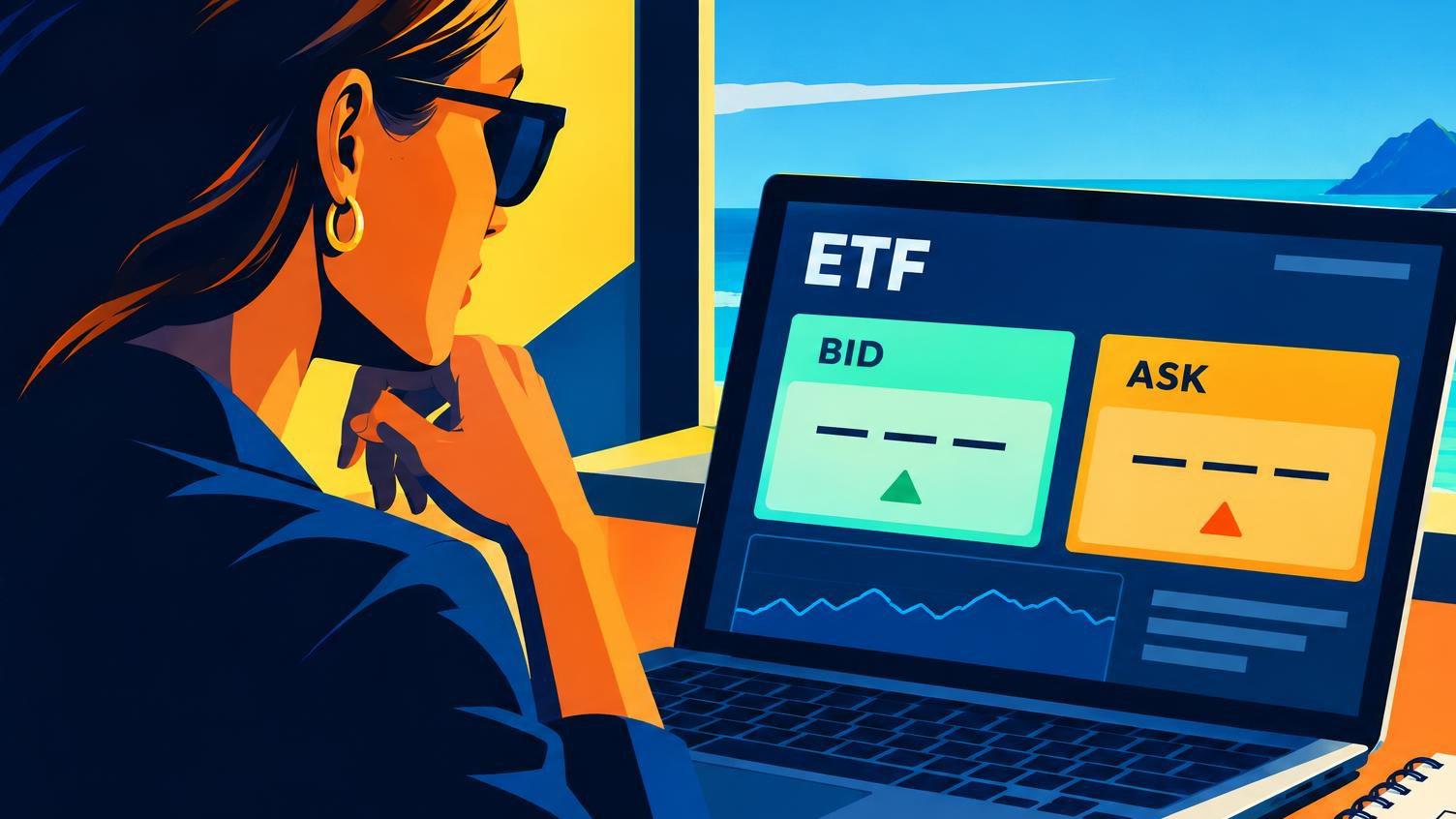
First, check whether your brokerage charges a commission for an ETF trade. Even a modest flat commission matters more when the purchase is small or frequent. Then look at the bid-ask spread: the difference between the highest current price a buyer will pay (the bid) and the lowest price a seller will accept (the ask). Buying at the ask and immediately selling at the bid would normally produce a small loss equal to that spread, before any other costs.
Also note whether an ETF is trading at a premium or discount to net asset value (NAV), the per-share value of its underlying holdings. A market price above NAV is a premium; a price below NAV is a discount. Neither condition automatically makes an ETF good or bad, but it is part of understanding the price you are actually paying.

4. Confirm the exact share class
A single mutual fund can offer several share classes. They may own the same underlying portfolio but charge investors differently. One class may have an upfront sales charge and lower ongoing fees; another may skip the initial charge but carry higher annual distribution fees. The right comparison is therefore not just Fund A versus Fund B, but this specific share class of Fund A versus the alternatives available to you.
Make sure the prospectus, performance figures, and fee table you are reading apply to the exact ticker or share class offered through your account. If a professional recommends a particular class, ask how its charges work, how long you expect to hold it, and whether a less costly class is available for your circumstances.
5. Put the costs in one short note before deciding
Use this five-line check before investing:
- Write down the fund’s expense ratio.
- List any purchase, redemption, exchange, load, commission, or account charges.
- For an ETF, note the bid-ask spread and whether the market price is at a premium or discount to NAV.
- Verify the ticker and share class.
- Compare the total picture with similar funds and with your intended holding period.
This will not tell you which fund is suitable for you; cost is only one part of an investment decision, alongside objectives, risk, diversification, tax considerations, and time horizon. It will, however, keep a familiar number—the expense ratio—from becoming a misleading shortcut. When unfamiliar terminology appears, look it up before moving on. In investing, understanding the words is often the first step toward asking better questions.