

Carlile Media is one of America's leading independent publishers of high-quality print editions, e-books, and audiobooks.
We specialize in “how-to” titles that help our readers grow their skillsets, achieve their goals, and expand their horizons.
The Mind of Adam Smith Part 1: The Theory of Moral Sentiments
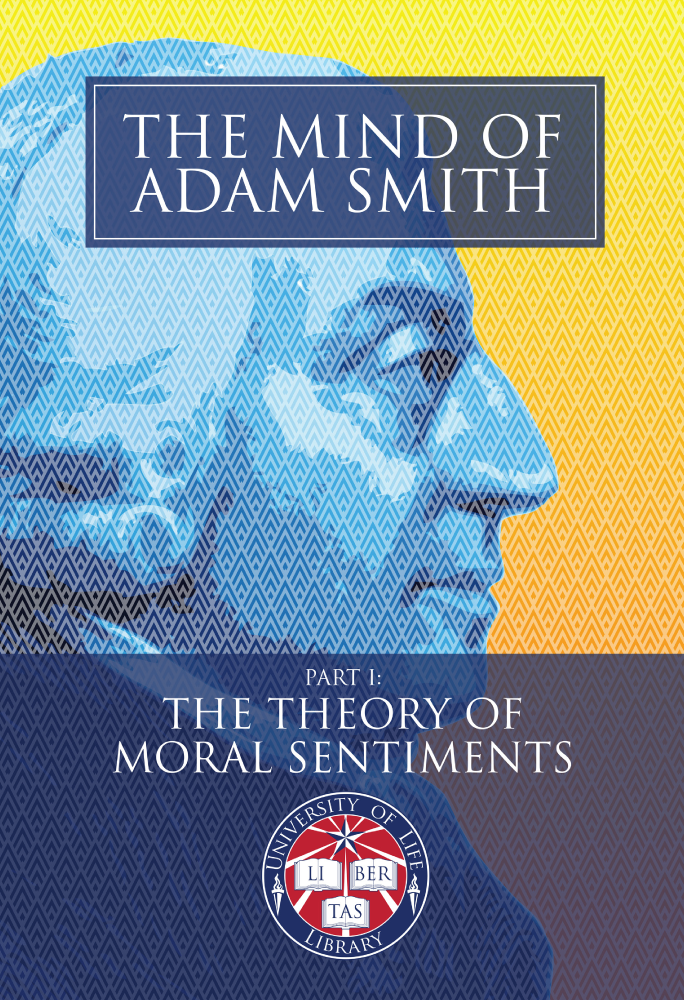

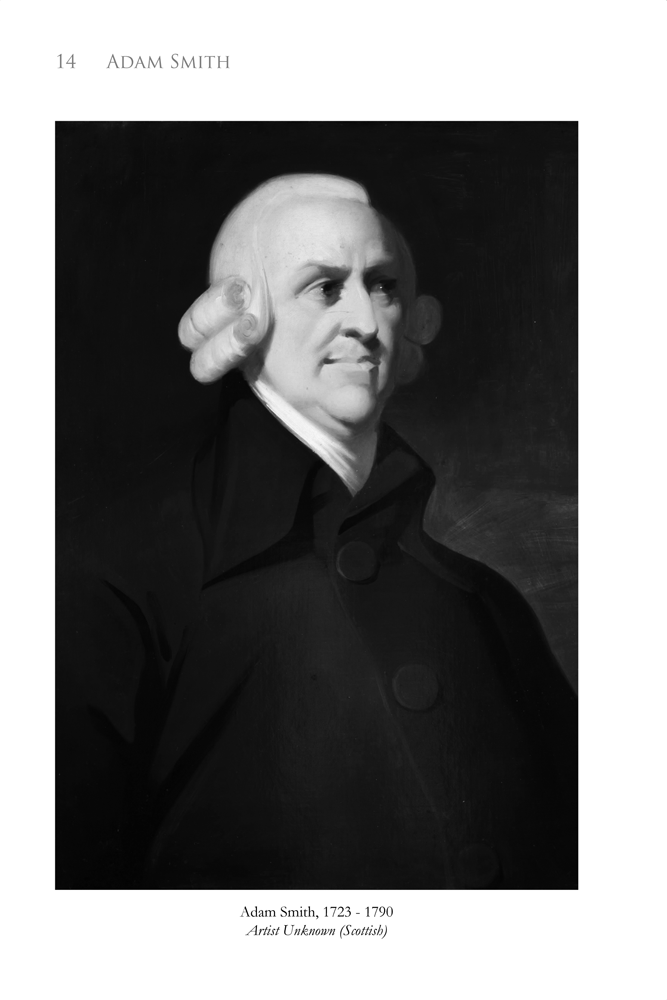
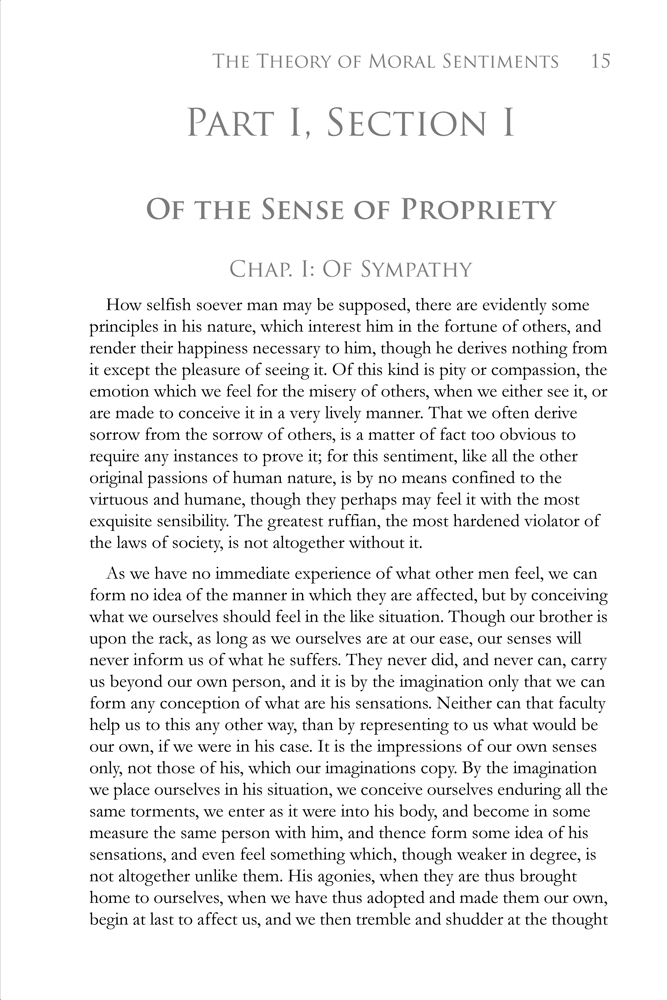
The Mind of Adam Smith Part 1: The Theory of Moral Sentiments
Newly Indexed and Illustrated with Scenes of the Scottish Enlightenment
Paperback Book
University of Life Library
Available Now
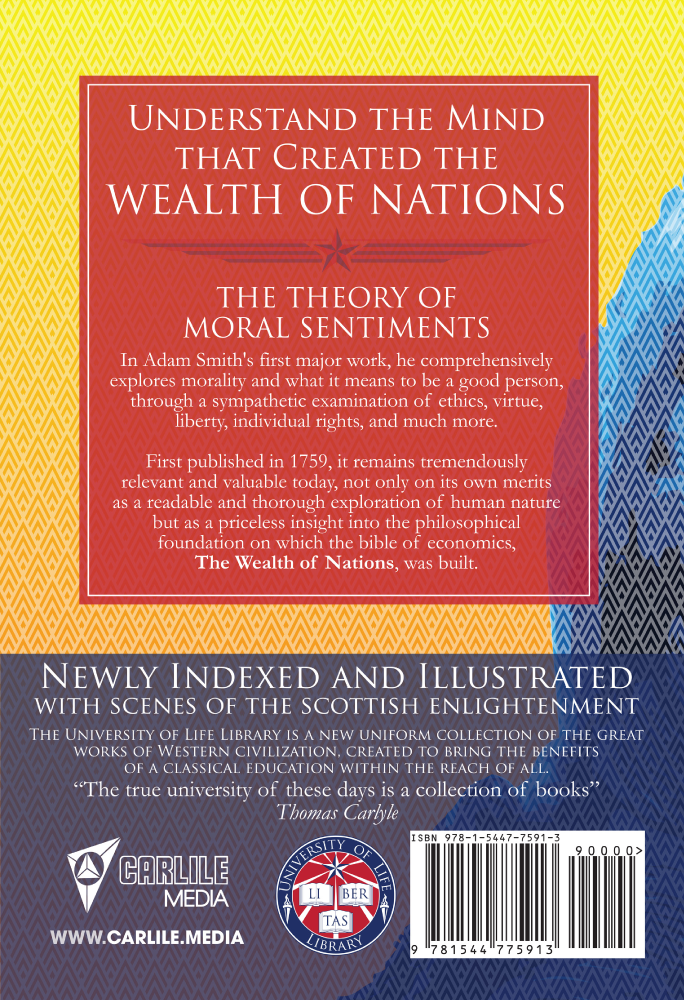
Understand the mind that created The Wealth of Nations.
In Adam Smith's first major work, he comprehensively explores morality and what it means to be a good person, through sympathetic examination of ethics, virtue, liberty, individual rights, and much more.
First published in 1759, it remains tremendously relevant and valuable today, not only on its own merits as a readable and thorough exploration of human nature but as a priceless insight into the philosophical foundation on which the bible of economics, The Wealth of Nations, was built.
This University of Life edition is newly indexed, and illustrated with scenes of the Scottish Englightenment.
This is not a facsimille edition or a low-quality reprint; it has been newly typeset for a modern audience, at a large text size, for your reading pleasure. Note that this heirloom-quality edition is over four hundred pages long, whereas other, low-quality editions are around three hundred pages, due to their small, uncomfortable text sizes.
ISBN/SKU: 978-1544775913
Adam Smith, Philosophy of Adam Smith, Moral Philosophy, Scottish Enlightenment, Englightenment
Ready to buy?
Before You Buy
Q: Who is this book for?
A: This edition is for readers interested in Adam Smith, moral philosophy, economics, the Scottish Enlightenment, political thought, and the intellectual foundations of The Wealth of Nations. It is particularly useful for anyone who knows Smith mainly as an economist and wants to understand the broader moral framework behind his ideas.
Q: What is The Theory of Moral Sentiments about?
A: The book examines how human beings make moral judgments, develop sympathy for others, form ideas of virtue and propriety, and balance self-interest with social responsibility. Smith explores conscience, justice, ambition, resentment, benevolence, self-command, and the social forces that shape moral behavior.
Q: Is this mainly an economics book?
A: No. The Theory of Moral Sentiments is a work of moral philosophy rather than economics. Its importance lies partly in showing the ethical and psychological ideas that informed Smith before he wrote The Wealth of Nations, giving readers a much fuller picture of his thought.
Q: Why should someone interested in The Wealth of Nations read this first?
A: Because it helps explain the human assumptions behind Smith's later economic work. The familiar idea of self-interest is only one part of his philosophy; The Theory of Moral Sentiments shows his equally strong concern with sympathy, justice, virtue, reputation, responsibility, and the way individuals relate to society.
Q: What is Adam Smith's idea of the “impartial spectator”?
A: It is Smith's way of explaining conscience and moral self-evaluation. He argues that people learn to judge their own behavior by imagining how a fair and disinterested observer might view their actions, creating an internal standard that helps restrain selfish impulses and shape moral conduct.
Q: Is the book still relevant to modern readers?
A: Yes. Its discussions of status, ambition, wealth, admiration, resentment, self-deception, social approval, empathy, and personal character remain strikingly recognizable. Readers interested in psychology, leadership, ethics, politics, and economics can all find ideas that connect directly with modern life.
Q: Is this an easy book to read?
A: It is more approachable than its reputation as an eighteenth-century philosophical classic might suggest, but it rewards patient reading. Smith develops his arguments through examples and observations of ordinary human behavior, making the work considerably more concrete than many abstract philosophical texts.
Q: What makes this edition different from inexpensive reprints?
A: This University of Life Library edition has been newly typeset rather than reproduced from an old scan, uses a large and comfortable text size, includes a detailed index, and is illustrated with scenes of the Scottish Enlightenment. The result is designed for sustained reading and long-term reference rather than simply providing the cheapest possible reproduction.
Q: Why is this edition over 400 pages when some versions are much shorter?
A: The difference is largely presentation rather than missing or added philosophical content. This edition uses larger, more readable typography and a spacious layout, so the complete text naturally occupies more pages than editions compressed into smaller type and tighter formatting.
Q: Is this part of a larger Adam Smith collection?
A: Yes. It forms Part 1 of The Mind of Adam Smith. Readers who want to continue exploring Smith's ideas can follow it with Part 2, Lectures on Jurisprudence, which turns more directly to justice, law, government, economics, and the institutional questions that lead toward The Wealth of Nations.
Affiliate Notice: As an Amazon Associate we earn from qualifying purchases.